THE BOXES
One box per position
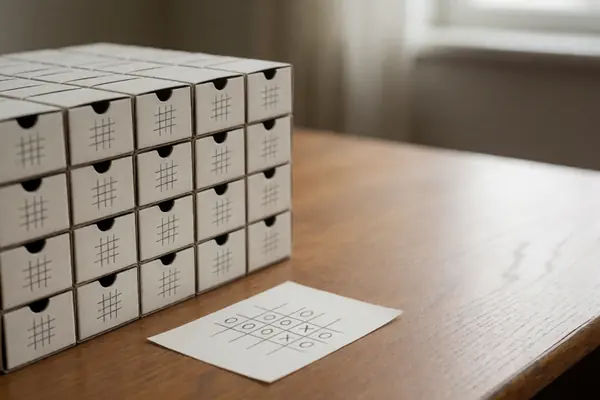
Each matchbox showed one board position. Michie's 1963 paper counts 287 essentially distinct positions for the opening player; accounts of the machine give 304 boxes.
How it was built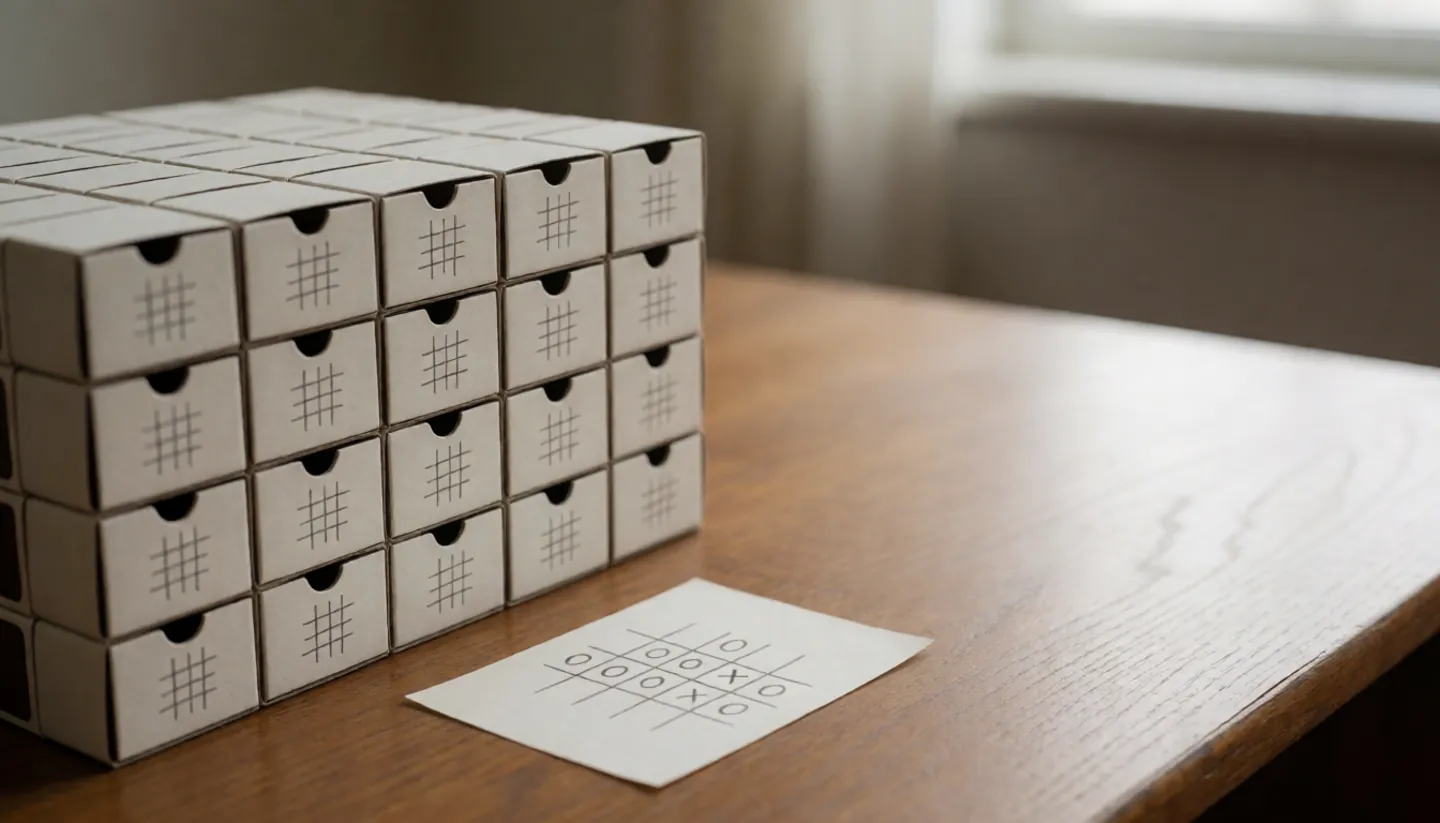
 doodletictac
A CLASSIC IN MACHINE LEARNING
SHAKE THE BOX the bead picks the move
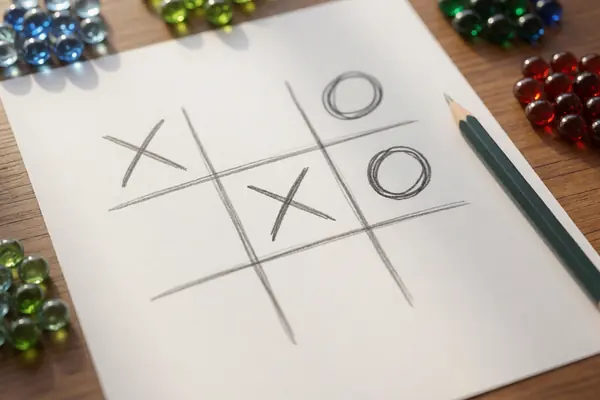
In 1961 a pile of matchboxes learned to play noughts and crosses.
Donald Michie had no computer to hand, so he built a learning machine from matchboxes and coloured beads. Each loss took beads away and each win added more, until it stopped losing. This independent guide explains how MENACE worked and what it shows about how machines learn.
Updated
Feed it a resultTHE SHORT ANSWER
MENACE had no program.
Its memory was the beads in each box.
THE BOXES
Each matchbox showed one board position. Michie's 1963 paper counts 287 essentially distinct positions for the opening player; accounts of the machine give 304 boxes.
How it was builtTHE MOVE
Beads were colour-coded to squares. The operator shook the box and tilted it, and a V-shaped card picked the first bead to arrive: that was the move.
Play a turnTHE LEARNING
After a loss the chosen beads were confiscated; after a win, three extra beads were added to each box used. Good moves grew more likely.
Feed it a resultA QUICK RESULT CHECK
Pick how a game ended to see what the operator did to MENACE's matchboxes. The bar shows how strongly the moves it played are encouraged next time.
Based on Michie's 1963 paper in The Computer Journal and accounts of the machine's maiden tournament.
TWO NUMBERS WORTH KNOWING
The maiden tournament pitted MENACE
against its builder, playing carefully.
220 games
Games in the maiden tournament
The tournament lasted 220 games over 16 hours. Playing the best strategy he knew, Michie found MENACE drew consistently after about 20 games.
THE TOURNAMENT · 1961
304 boxes
Matchboxes in MENACE
Rotations and mirror images were treated as the same position and MENACE always played first, which kept the number of boxes small enough to build by hand.
THE MACHINE
A Ferranti Pegasus 2 computer later simulated the machine, playing both sides at about a game a second. Michie noted that random games favour the opening player by about 2 to 1.
HOW ONE GAME WENT
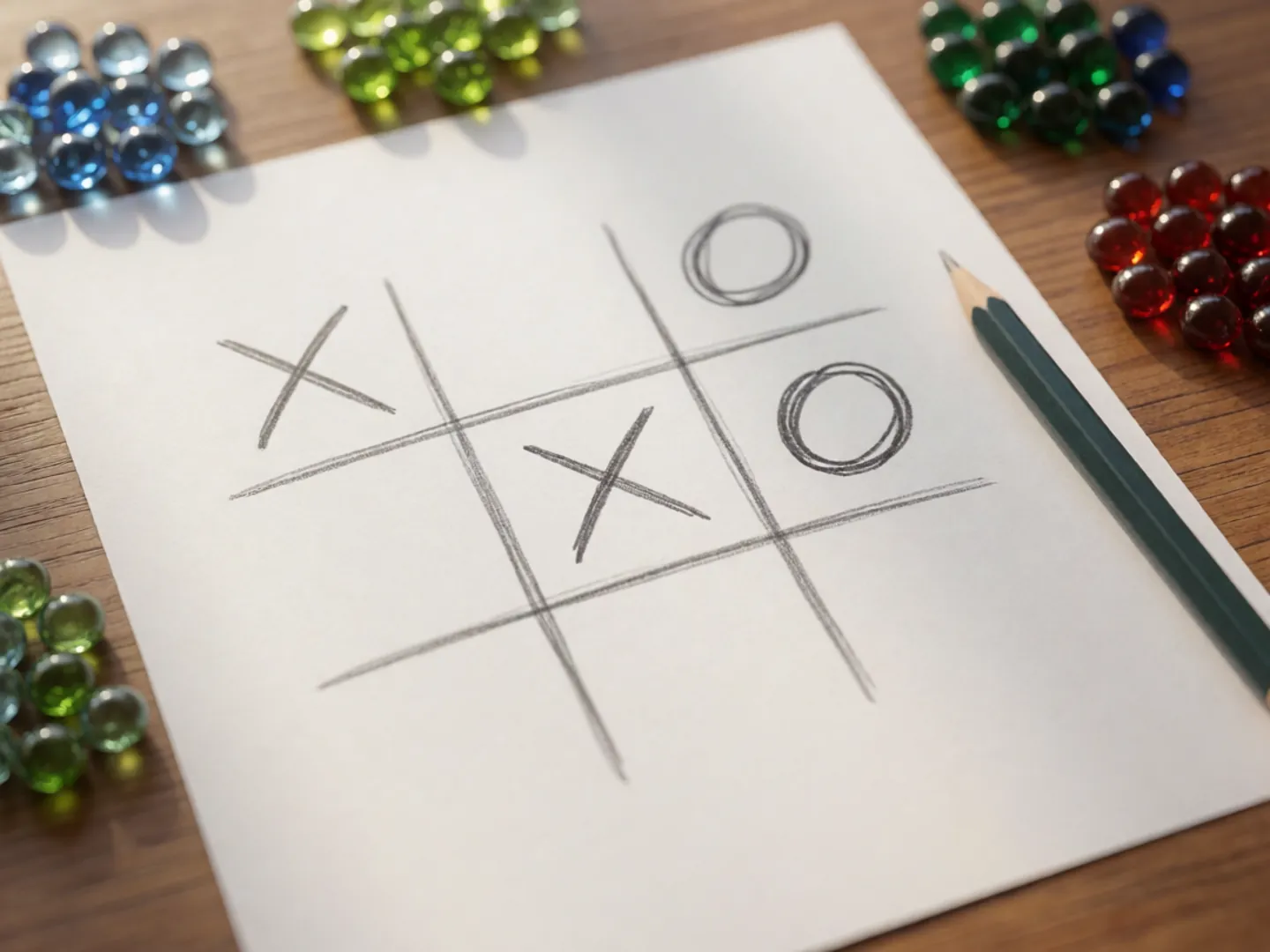
Playing MENACE needed a human operator. These are the steps described by Michie and in later accounts of the machine.
Locate the matchbox showing the current position, or a rotation or mirror image of it.
The beads run to the front and the V-shaped partition selects the first bead to arrive.
Each colour stands for a square; put MENACE's mark there, set the bead aside and leave the tray ajar.
Remove the chosen beads after a loss, add one for a draw and three for a win.
WHY IT STILL MATTERS

Michie wrote that the strength of reinforcement should be greatest for the last moves of a game and weaker towards the start. So the first-move box began with four beads of each colour, later boxes with three, two and then one, and each lost bead mattered more late in the game.
The University of Edinburgh traces its artificial intelligence research to a small group Michie set up at 4 Hope Park Square in 1963. MENACE is now a favourite teaching example of reinforcement learning, rebuilt in classrooms and simulated online.
Questions
The Matchbox Educable Noughts And Crosses Engine, a learning machine built by Donald Michie around 1961 from matchboxes and coloured beads. It played noughts and crosses and improved by trial and error.
Each box showed a board position and held beads whose colours stood for the empty squares. The operator shook and tilted the box, and the bead caught at the front by a V-shaped card gave the move.
After each game the beads it used were changed: removed after a loss, one added for a draw and three added for a win. Successful moves became more likely, failing ones less likely.
Against careful play it learned to draw. In its 220-game maiden tournament it drew consistently after about 20 games, though Michie could sometimes beat it by switching openings until it adapted.
No. It is an independent guide to the history of a learning machine. The name is used only in the sense of tic-tac-toe, the American name for noughts and crosses.
Sources
ABOUT THIS NAME
doodletictac.com is part of the DoodleSale portfolio. It isn't in an auction right now, but you can ask about leasing it.